Stars
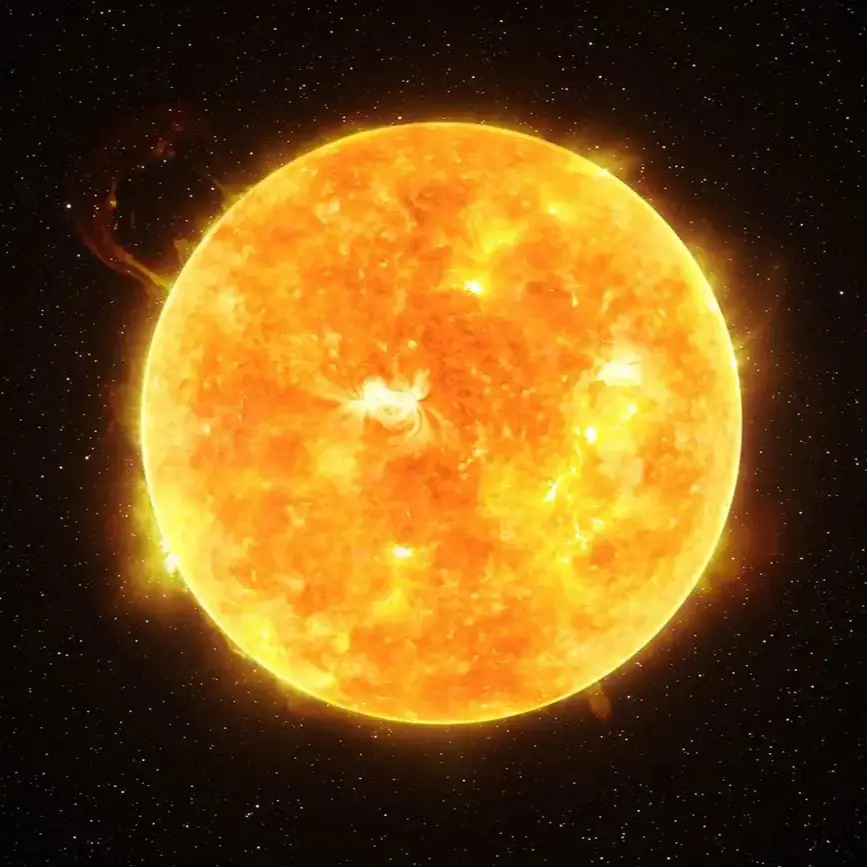
Sun
A nearly perfect sphere of hot plasma, accounting for 99.8% of the total mass of the Solar System.
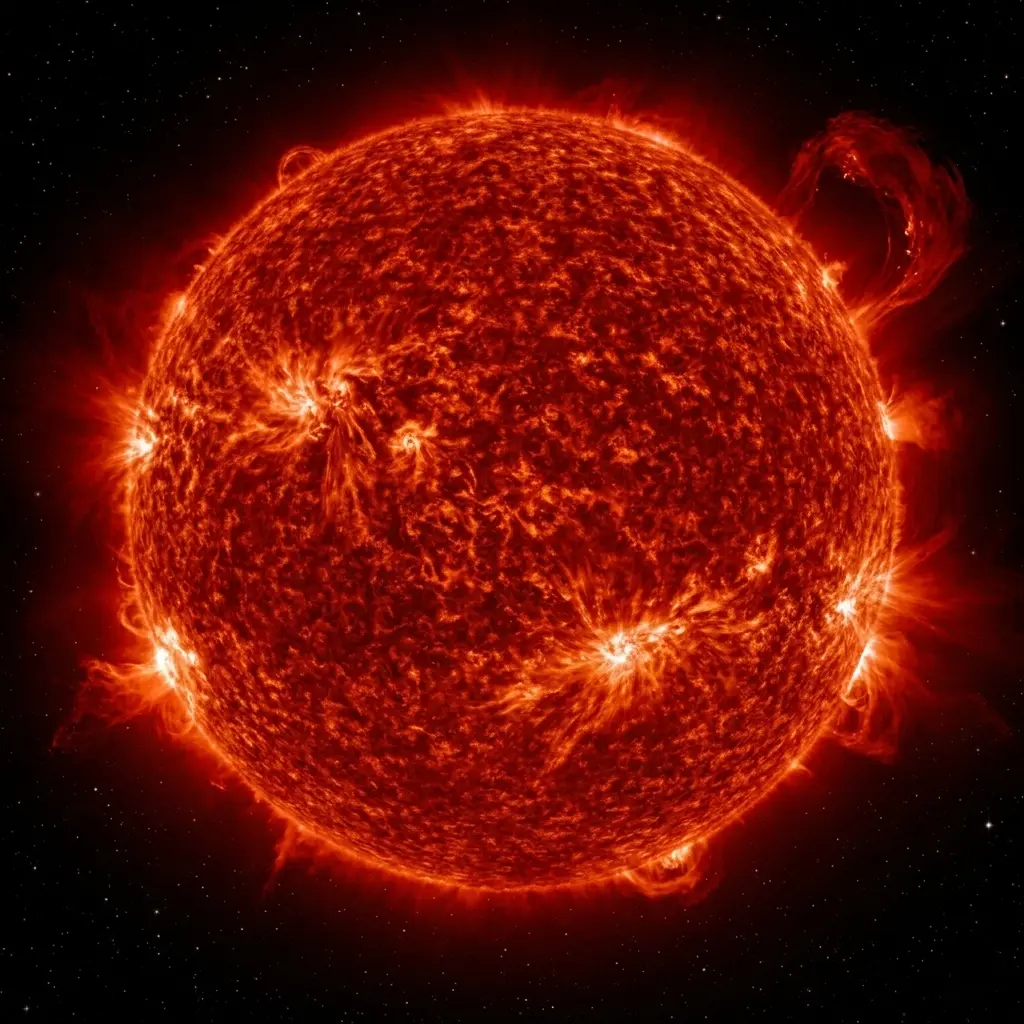
Proxima Centauri
The closest known star to the Sun. It is a Red Dwarf and a "flare star," meaning it undergoes sudden dramatic increases in brightness. A cool, low-mass star that is part of the Alpha Centauri triple system.
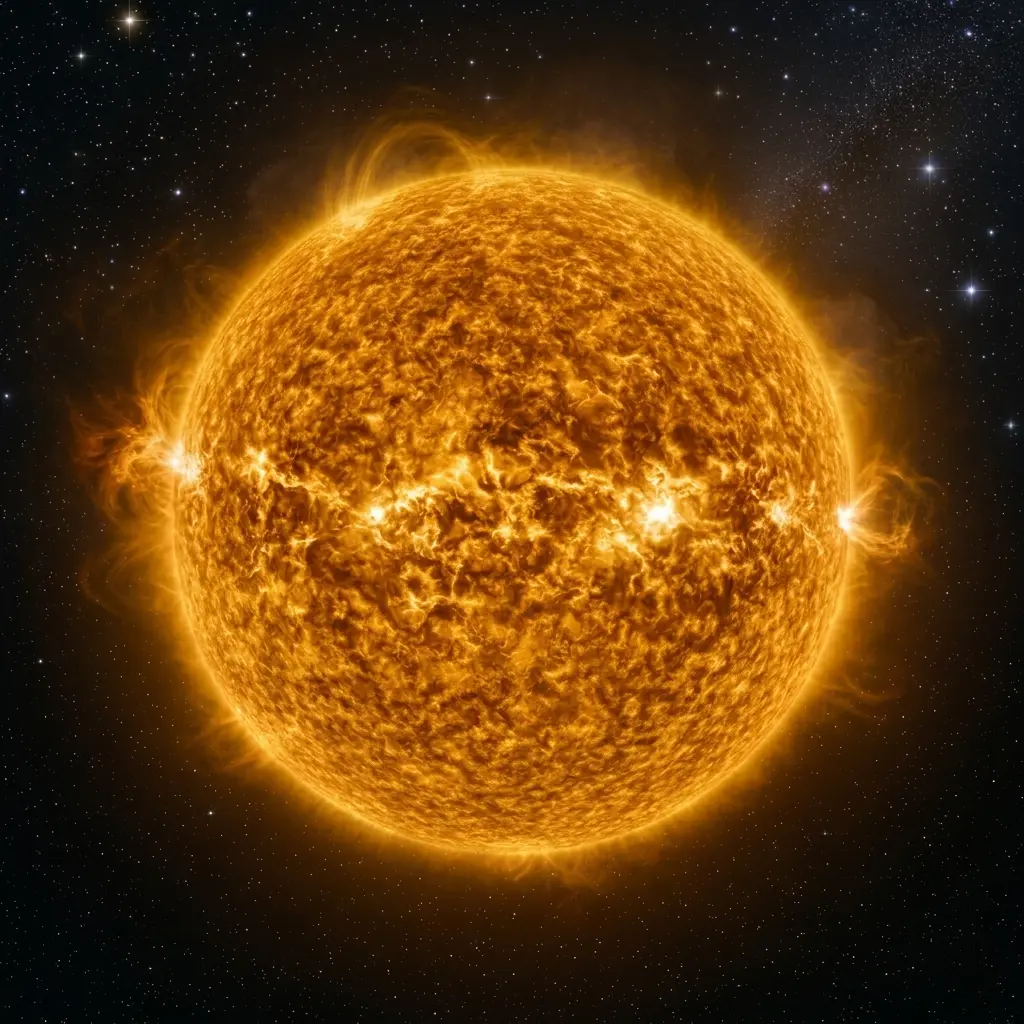
Alpha Centauri A
The primary star of the Alpha Centauri system and the fourth brightest star in the night sky.
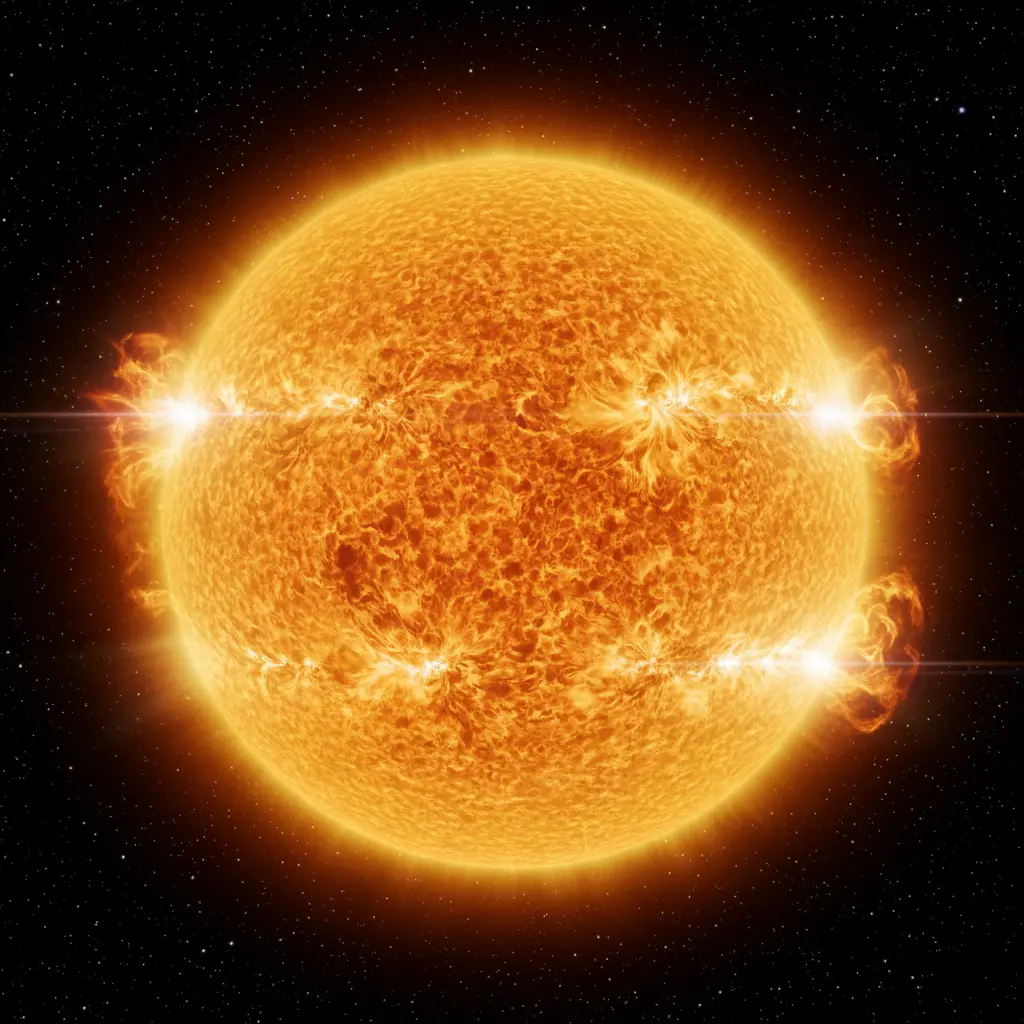
Alpha Centauri B
The second largest star in the Alpha Centauri system. An Orange Dwarf, slightly cooler and less luminous than the Sun.
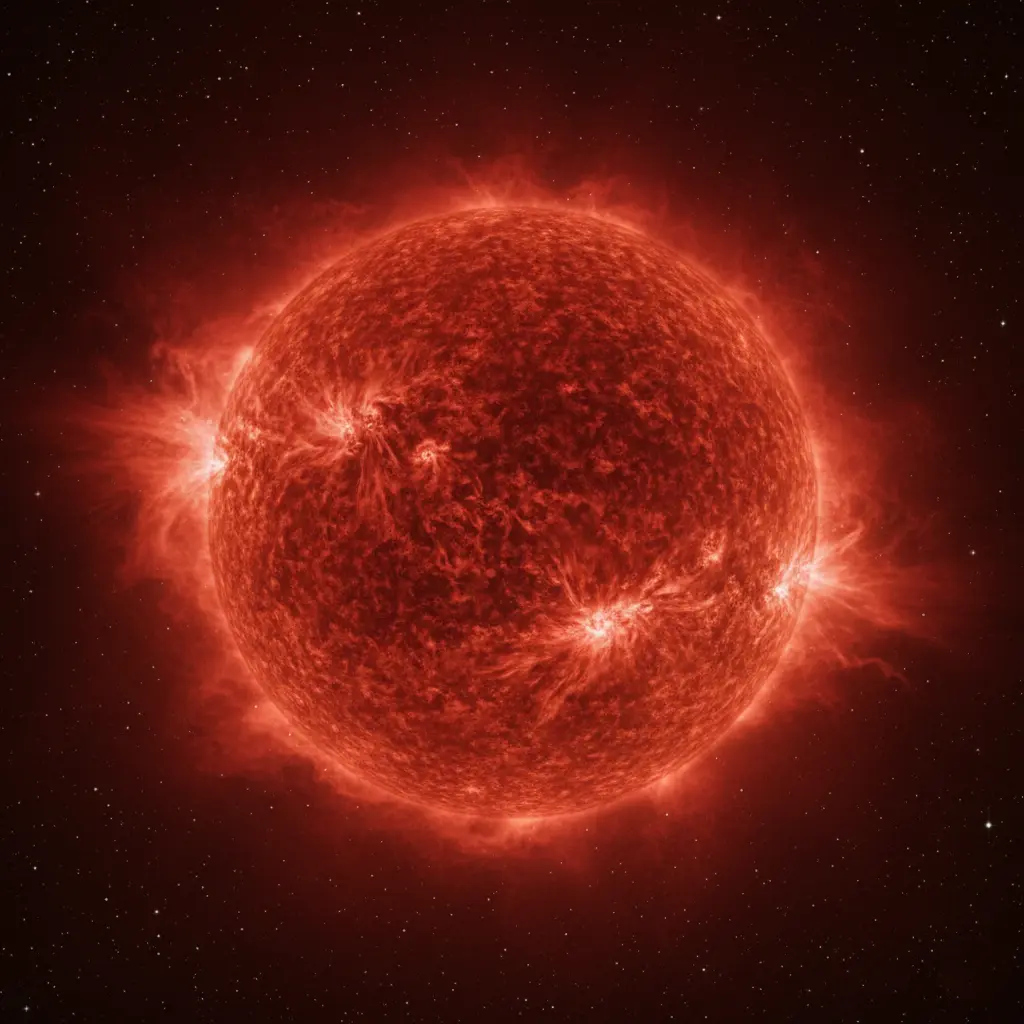
Barnard's Star
An extremely old Red Dwarf. It is approaching the Sun and will be our closest neighbor around the year 9,800 AD.
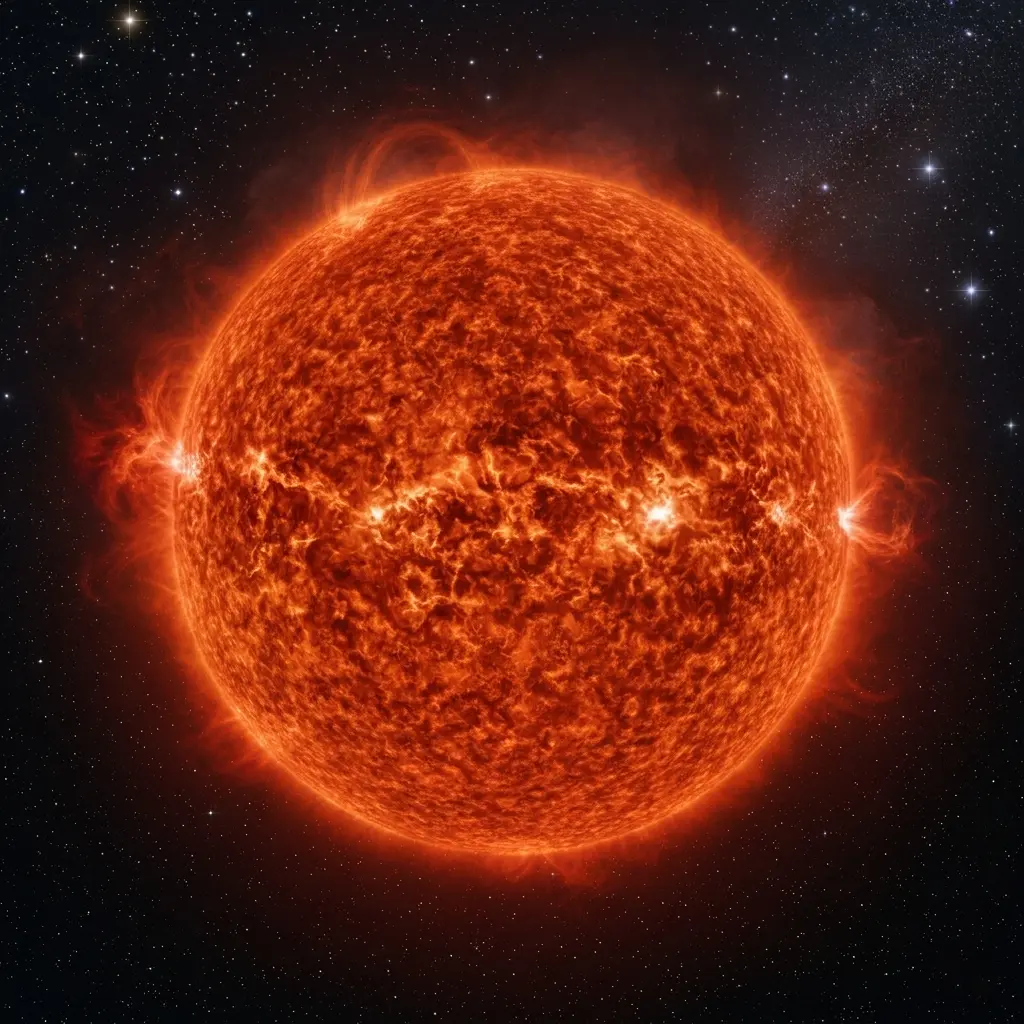
Wolf 359
A very faint star in the constellation Leo, often used as a setting in science fiction due to its proximity. A high-activity Red Dwarf. It is one of the faintest stars known and emits only about 0.1% of the Sun's energy.
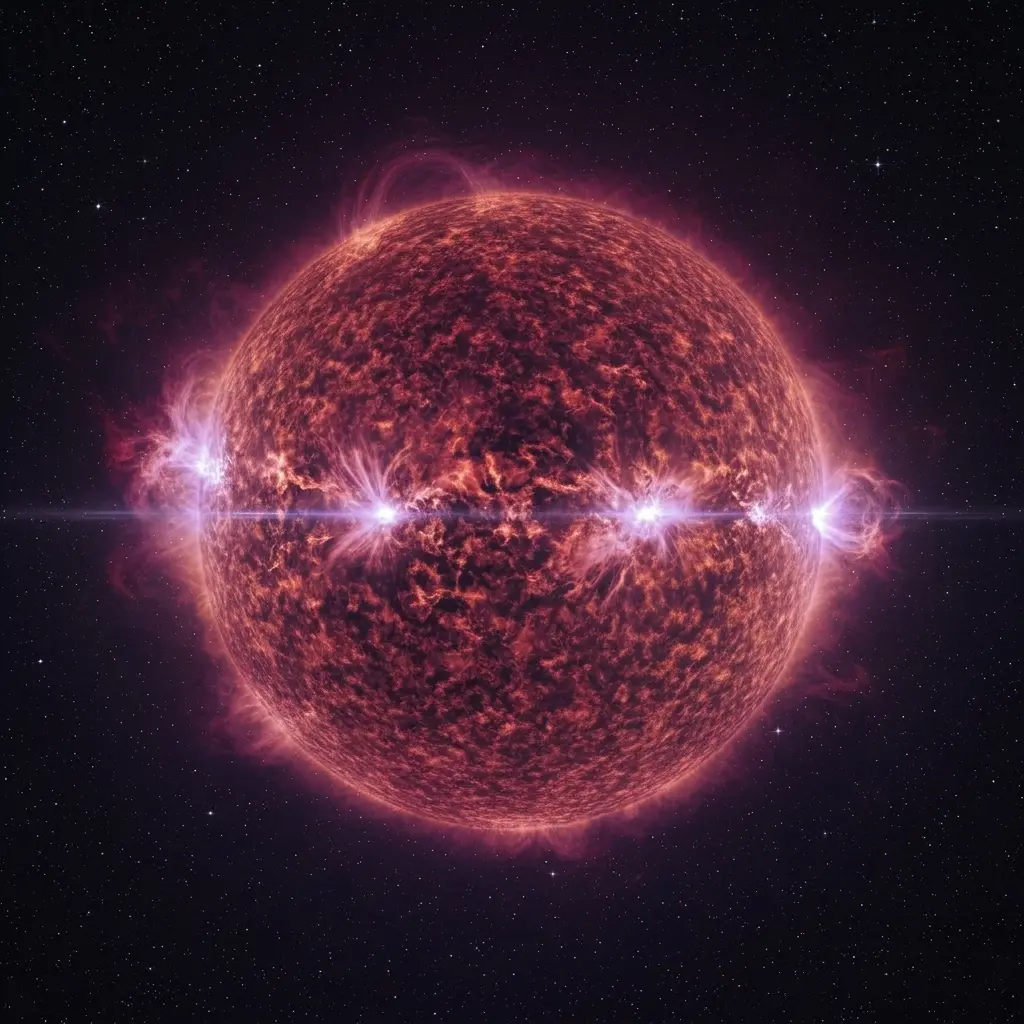
Luhman 16A
Luhman 16A is a brown dwarf of spectral type L7.5. Brown dwarfs are often called "failed stars" because their mass is too low to sustain stable hydrogen fusion, as in our Sun.
Luhman 16B
Luhman 16B is a T0.5 brown dwarf star, part of the closest binary brown dwarf system to the Solar System, located just 6.5 light-years from Earth. This object, with a mass of approximately 28 Jupiter masses, is renowned for its extreme atmospheric activity: unlike its more stable companion, Luhman 16A, 16B exhibits abrupt and chaotic brightness variations caused by colossal storms and a patchy cloud cover of molten silicates and metals.
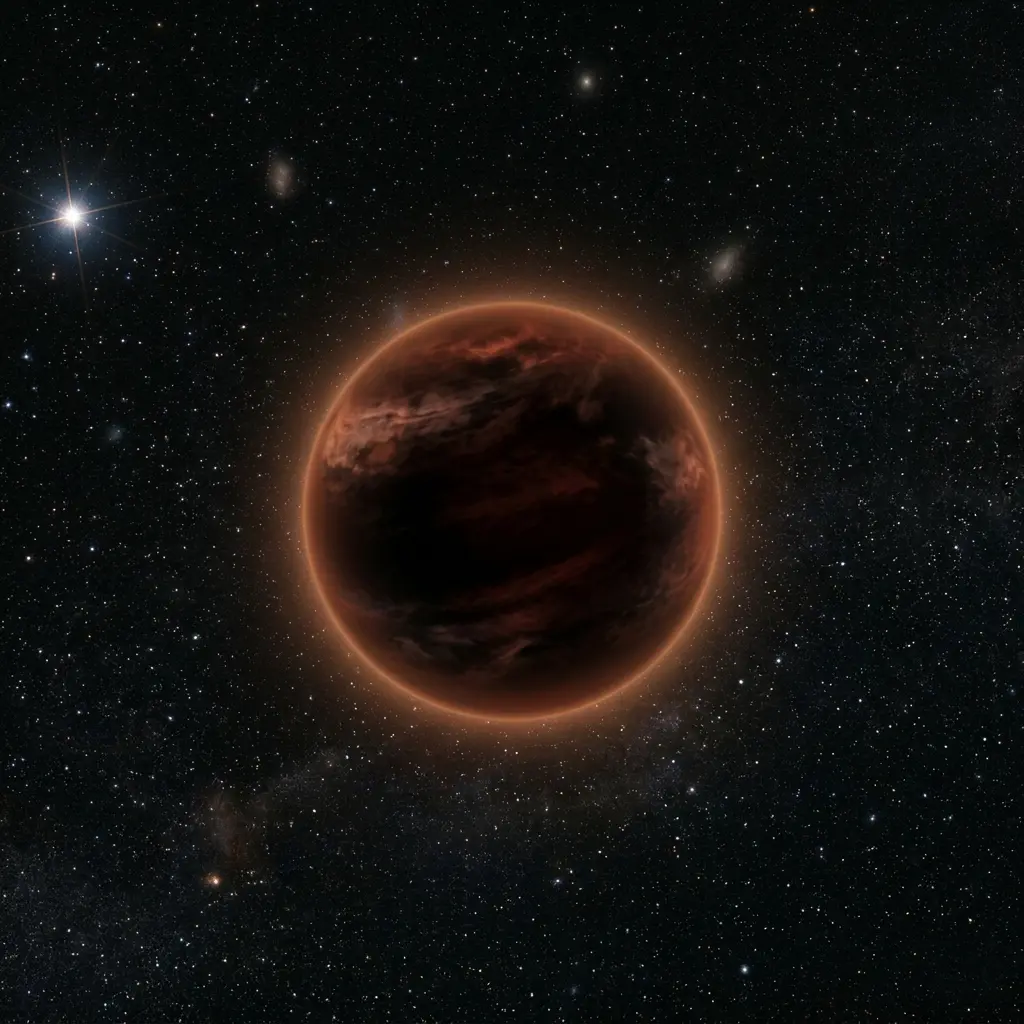
WISE 0855−0714
WISE 0855−0714 is a unique subbrown dwarf located approximately 7.2 light-years from Earth, which holds the title of the coldest known stellar object outside the Solar System, with a surface temperature of between -48°C and -13°C. With a mass between 3 and 10 times that of Jupiter, this object occupies characteristics intermediate between a giant planet and a star, with infrared data indicating the presence of water clouds or ice in its atmosphere.
Lalande 21185
Lalande 21185 is a dim red dwarf of spectral type M2V located in the constellation Ursa Major at a distance of about 8.3 light-years from Earth, making it one of the closest star systems to the Sun and the closest object of its type in the northern hemisphere of the sky.

Sirius A
Sirius A is the brightest star in the night sky, located in the constellation Canis Major at a distance of just 8.6 light-years from us. A blue-white main-sequence star , it is twice as massive as the Sun and emits 25 times more energy, which, combined with its proximity to Earth, gives it exceptional brilliance.
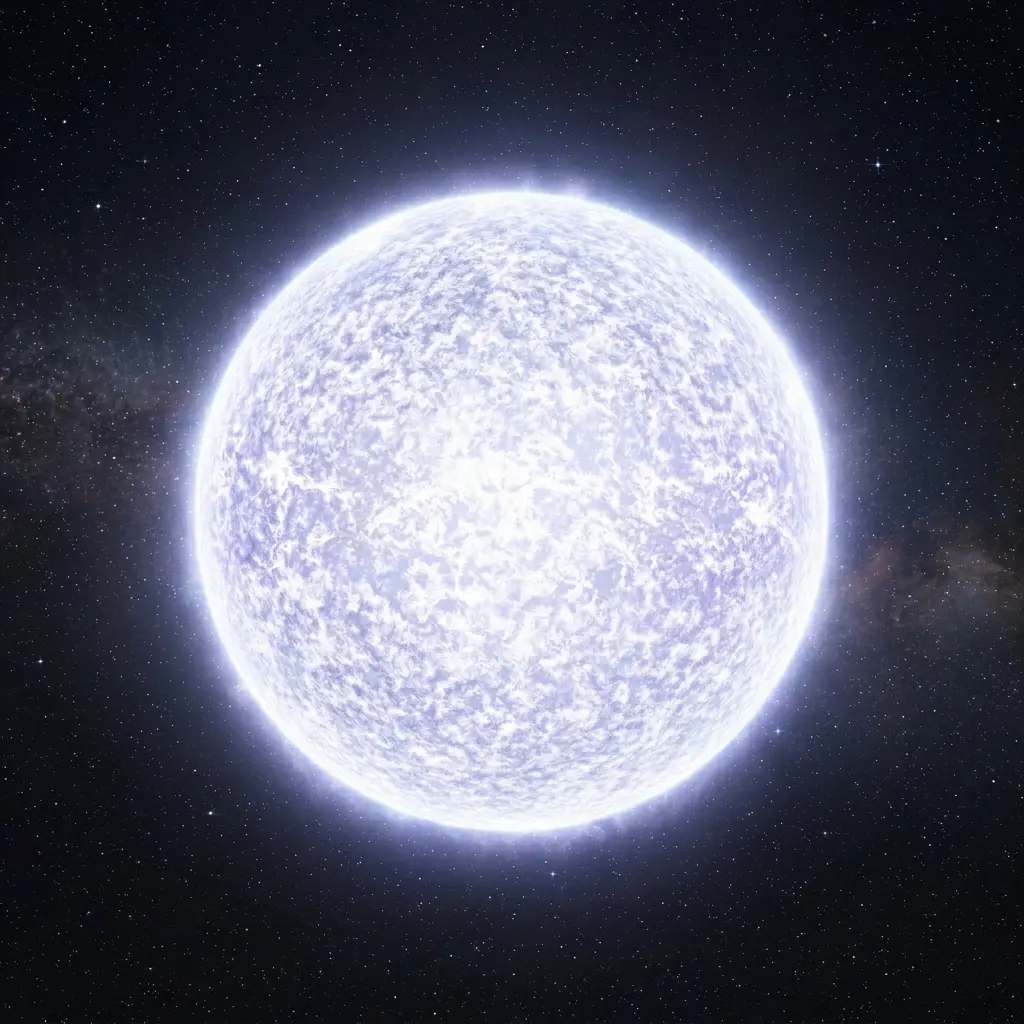
Sirius B
Sirius B is a white dwarf, an extremely dense remnant of a massive star, which is the companion of the bright Sirius A in a binary star system. Although it is comparable in mass to the Sun (comprising approximately 98% of its mass), its volume is barely larger than Earth, making its density hundreds of thousands of times greater than that of the Sun.